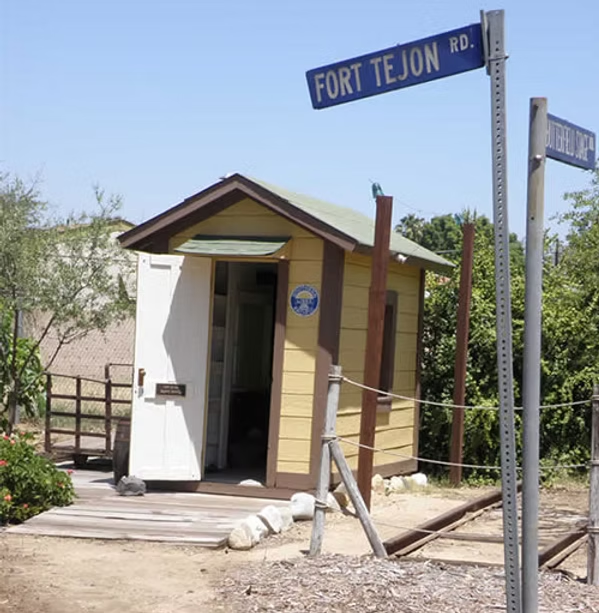
Southern Pacific Railroad Shanty
1914-1948
The Southern Pacific Railroad flagman’s shanty, also known as a watchman’s or signalman’s shanty, is a 5 feet by 8 feet wooden structure. It was originally located on the northwest side of Maclay Avenue, approximately 60 feet northeast of the center line of Southern Pacific Railroad’s main track in San Fernando. The shanty and a pot-bellied stove were moved to the Maclay location in 1914. The shanty remained operational until automatic signals were added at the Maclay Avenue crossing in 1948.
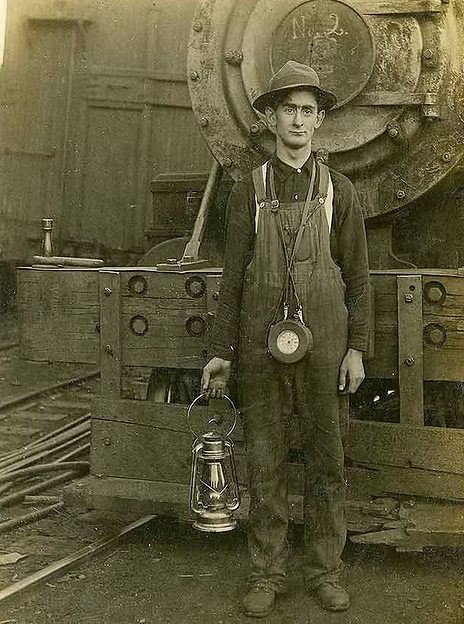
With the automatic signals, the need for a flagman and his shanty were no longer necessary and the need for a flagman faded into history. Until then, a flagman was an employee of the railroad assigned to protect anyone performing work on, or moving toward, the railroad right of way. For example, a car approaching the track would be warned when a train was approaching. With his lantern, the flagman would customarily signal approaching travelers and automobiles to protect them against existing dangers of approaching cars or trains and warn to stop. “Stop, Look and Listen” was the theme of the day, when crossing any railroad tracks. The flagman typically worked 12 hour shifts.